Ovarian Cancer Risk Reduction: What to Know About Opportunistic Salpingectomy
Ovarian Cancer Risk Reduction: What to Know About Opportunistic Salpingectomy
Ovarian cancer causes more deaths than any other cancer of the female reproductive system, and it rarely announces itself early. At Evolve Gynecology in Las Vegas, one of the most useful conversations we have with patients isn't about a scan or a blood test; it's about a fairly simple surgical decision that a growing body of research says can meaningfully lower risk: opportunistic salpingectomy.
If you're not familiar with that term, you're not alone. It's a newer concept even among longtime gynecology patients, and the American College of Obstetricians and Gynecologists (ACOG) has spent the past several years refining its guidance on it. Here's what the evidence actually shows, who it applies to, and what questions to bring to your own gynecologist.
The Symptoms Most Women Miss
Ovarian cancer will be diagnosed in an estimated 21,010 women across the United States this year, and about 12,450 women will die from it, according to the American Cancer Society's most recent statistics. It's the fifth leading cause of cancer death among women and the deadliest cancer of the reproductive organs; a woman's lifetime risk of developing it is roughly 1 in 91.
Part of what makes it dangerous is how ordinary it feels at first. The symptoms most closely tied to ovarian cancer are bloating, pelvic or abdominal pain, feeling full quickly or having trouble eating, and urinary urgency or frequency. Every one of those can just as easily mean you ate too much at dinner or you're fighting a bladder infection. What separates a red flag from a bad week is the pattern: symptoms that are new for you, that stick around, and that show up more than twelve times a month deserve a call to your gynecologist.
If you're not sure whether what you're feeling counts, that's exactly the kind of question worth bringing to your next
well-woman exam instead of sitting on it until next year's visit.
Why There's No Ovarian Cancer Equivalent of a Pap Smear
A lot of patients assume their annual Pap smear covers this. It doesn't: a Pap smear screens for cervical cancer and HPV, not ovarian cancer, and there is currently no reliable screening test that catches ovarian cancer early in women who have no symptoms and no known elevated risk. The CA-125 blood test and transvaginal ultrasound exist and are useful once ovarian cancer is already suspected, but neither has been shown to reduce deaths when used as routine screening in the general population. They tend to produce enough false positives to send healthy women into surgery they didn't need.
That gap is exactly why the stage at diagnosis changes everything. Ovarian cancer caught while still confined to the ovary has a five-year survival rate above 90%. Once it has spread beyond the pelvis, that number falls to roughly 30%. Symptom awareness and honest conversations with your gynecologist are doing a lot of the work a screening test can't.
Who's at Higher Risk, and What Actually Lowers It
Age is the biggest factor: ovarian cancer mainly affects women after menopause, and more than half of diagnoses happen at 63 or older. Family history raises risk substantially, especially with a BRCA1 or BRCA2 mutation or Lynch syndrome; both call for genetic counseling rather than a generic recommendation. Endometriosis, infertility, and never having carried a pregnancy are also associated with higher risk.
Some things measurably lower it, too. Oral contraceptive use is one of the most consistent protective factors in the research, with risk dropping the longer someone has used it; pregnancy and breastfeeding lower risk as well. And there's a third strategy that's gotten far more attention from ACOG over the past several years: removing the fallopian tubes during a surgery you're already having, for an entirely different reason.
Opportunistic Salpingectomy: The ACOG-Backed Strategy Worth Knowing About
For decades, ovarian cancer prevention research focused on the ovaries themselves. Then pathologists started finding the earliest cell changes for the most common and lethal type of ovarian cancer, high-grade serous carcinoma, not in the ovary, but in the fringed end of the fallopian tube. That single finding reshaped how gynecologic surgeons think about prevention.
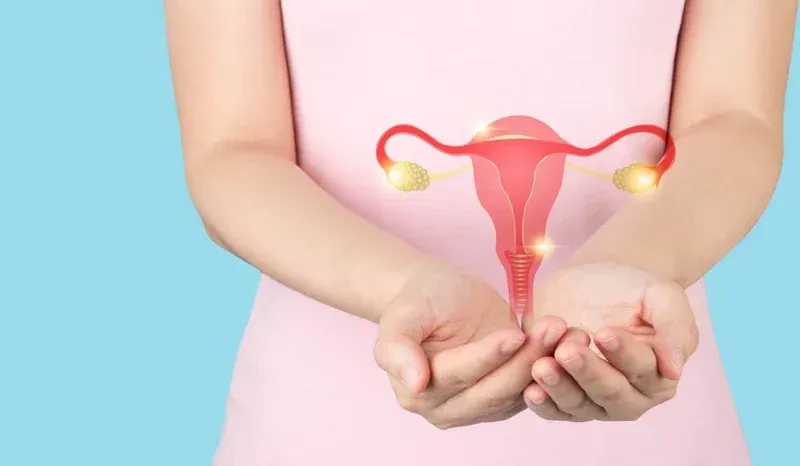
Opportunistic salpingectomy means removing both fallopian tubes, and leaving the ovaries in place, during a pelvic surgery a woman is already having for another reason: most often a hysterectomy for benign conditions like fibroids, or as an alternative to traditional tubal ligation for permanent birth control. In 2019,
ACOG formalized its support for this approach in Committee Opinion No. 774, recommending that obstetrician-gynecologists discuss the option with any woman who has completed childbearing and is already undergoing pelvic surgery.
The safety data is reassuring. Adding a salpingectomy to a planned hysterectomy or sterilization procedure doesn't increase the risk of complications like infection, blood transfusion, or hospital readmission, and it doesn't change which surgical approach your surgeon plans to use. Because the ovaries themselves stay in place, hormone production continues as it normally would: this isn't the same as removing the ovaries, and it doesn't cause surgical menopause. Follow-up studies measuring ovarian function years after the procedure haven't found a meaningful difference compared with women who didn't have it done.
The risk reduction itself is significant, if not absolute. ACOG cites a Swedish study showing a 65% drop in ovarian cancer risk among women who had both tubes removed. More recent research, including a large 2026 study published in JAMA Network Open, found the risk of serous ovarian cancer specifically, the most common and lethal form, dropped by 78% among women who'd had an opportunistic salpingectomy. It's not a guarantee: ACOG is clear that this strategy lowers risk substantially without eliminating it. But for a procedure that adds minimal time to a surgery already on the schedule, that's a real trade-off in your favor.
This is different from a bilateral salpingo-oophorectomy, which removes the ovaries as well as the tubes and offers even greater protection. Because it also ends ovarian hormone production, it induces surgical menopause and carries its own tradeoffs around bone health, cardiovascular risk, and menopausal symptoms. ACOG treats that as a separate, more individualized conversation, generally reserved for women whose personal or family history, such as BRCA1/2, Lynch syndrome, or a strong family pattern of ovarian or breast cancer, puts them at significantly higher risk. If that describes you, genetic counseling is the right next step before any surgical decision gets made.
Bringing This Up With Your Gynecologist
If you have a hysterectomy or a permanent sterilization procedure on the calendar and you're finished building your family, opportunistic salpingectomy is worth raising before surgery. It's a short conversation that can change what happens on the operating table, and ACOG's position is that every eligible woman deserves the chance to have it.
Dr. Toni Hodges-Wills and the team at Evolve work with a trusted network of gynecologic surgeons and specialists across Las Vegas. A large part of what happens at a concierge visit is exactly this: sitting down with your personal risk picture, family history, genetics, prior diagnoses, and making sure the right questions get asked before any procedure, whether it happens in our office or with a surgical colleague we coordinate with directly.
If ovarian cancer risk is something you've been meaning to ask about,
schedule a visit
and bring your questions. It's exactly the kind of unhurried conversation concierge care was built to make room for.